
Property Taxes
If you own property in the Town of Midland, you are required to pay property taxes. These taxes help fund essential services like roads, parks, and emergency services. On this page, you can access information on how property taxes are calculated, billed, and paid, along with available programs and rebates. View the Property Tax Collection Policy.
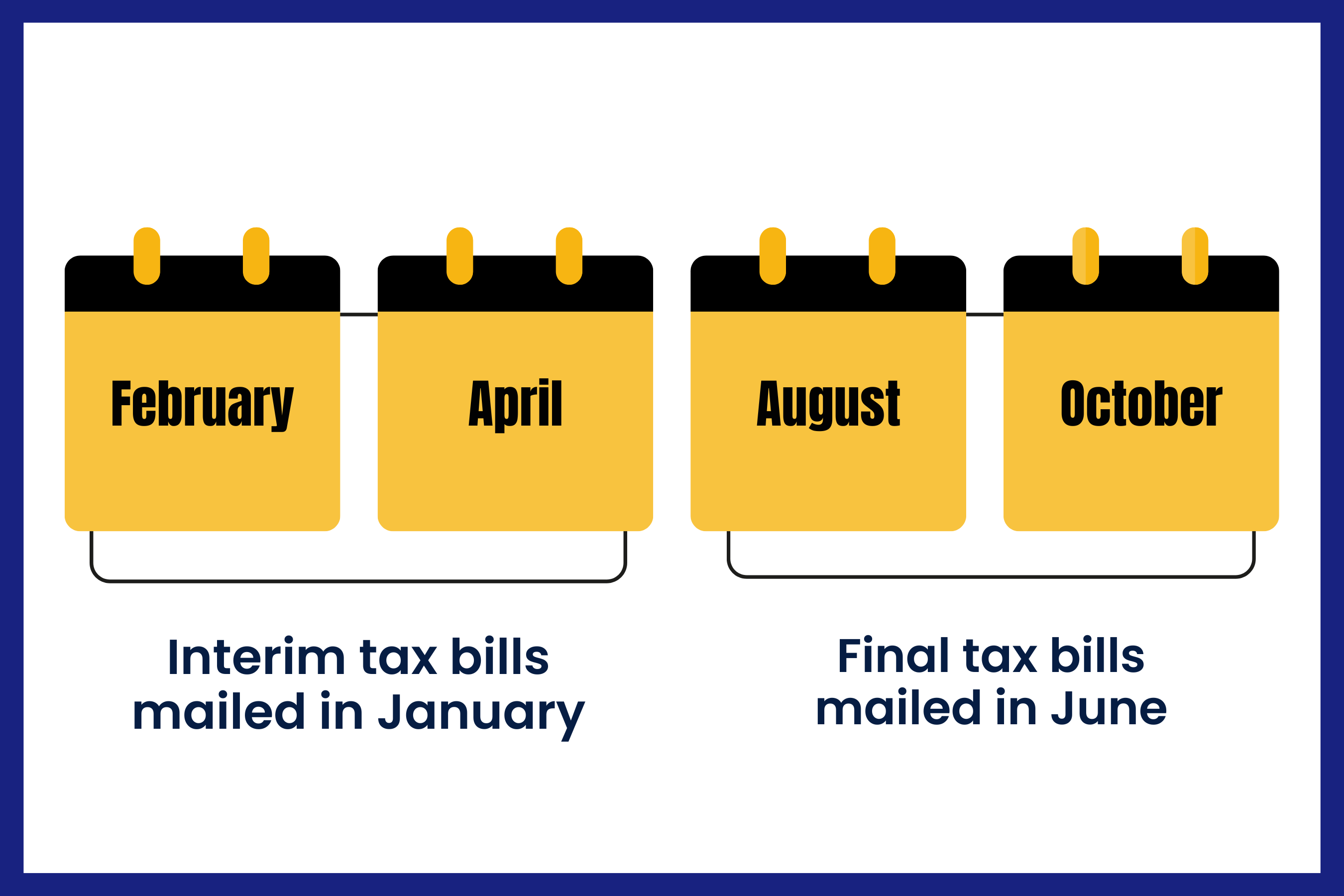
Property taxes are due on February 20, April 20, August 20, and October 20 each year, or on the business day immediately following if the 20th occurs on a weekend or statutory holiday. Interim bills are mailed in January and Final bills are mailed in June. Pay by the due date to avoid penalties.


How Property Tax is Calculated
The Town's portion of your property tax bill is calculated by applying the Town's tax rate to your property's assessed value. Your bill also includes amounts the Town collects on behalf of other organizations and levels of government. The Town decides how much revenue is needed to deliver services and sets the Town's tax rate through the annual budget.
The Municipal Property Assessment Corporation (MPAC), an independent, not-for-profit organization, determines the assessed value of every property in Ontario. Questions about your property assessment should go directly to MPAC.
Tax Ratios by Property Class
Residential, commercial and industrial properties can pay different amounts of tax for the same assessed value. The Province sets the allowable range of tax ratios for each property class, and the County of Simcoe sets the ratios used in Midland.
Tax ratios affect how the Town's total tax levy is shared among property types. This affects individual tax bills, even when the overall levy stays the same.
Property Tax Billing
- Interim tax billing is based on 50% of the previous year’s tax levy - mailed in January of each year.
- Final tax billing is based on the current annual tax levy minus the interim amount billed - mailed in June of each year.
Supplementary Taxes
Supplementary taxes are issued for new building constructions, additions, renovations, and property class changes. These are issued once the Municipal Property Assessment Corporation (MPAC) has completed their assessment.
You may get a supplementary tax bill(s) if your property’s assessment value or classification changes. It can be retroactive to the date of occupancy or purchase, for the current and/or two preceding taxation years.